
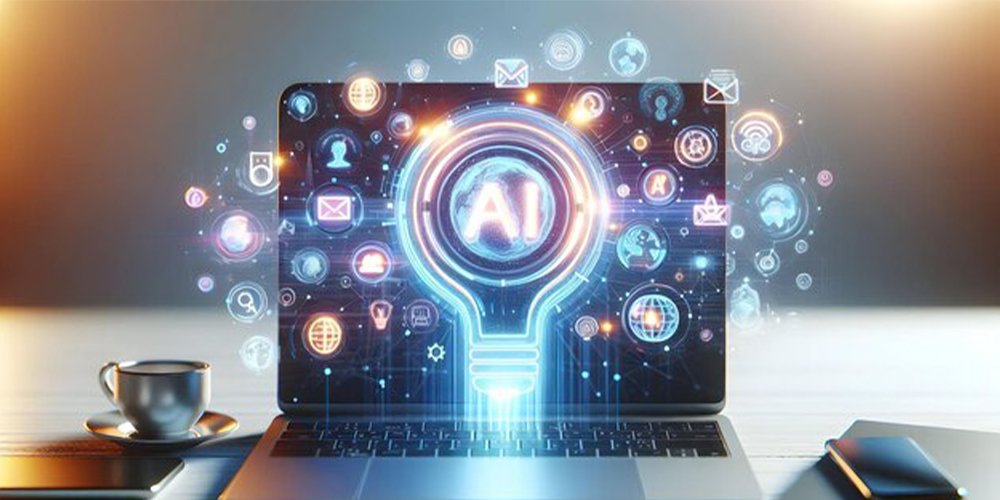
Artificial Intelligence (AI) has actually been one of the most revolutionary technologies in the area of digital marketing. By the year 2026, over the majority of companies will use AI in more ways than one to make their work easier, improve their marketing campaigns, and find out more about their customers. AI might be the major enabler for the industry but at the same time, it poses a question about whether it will be the source of growth or will it be a risk to the artists as well as to the public. The understanding of the equilibrium will help the companies who want to make the most of the new technology.
One of the biggest advantages that AI has brought to the online marketing world is automation which leads to efficiency. AI driven tools are capable of carrying out tasks that are repetitive in nature for instance placing ads, dividing the audience into segments, handling email marketing and so on along with the reporting of this entire process. These tasks being automated not only free up the time but also minimize the chances of human error which leads to the marketers working on strategic planning, developing their creativity and making the topmost decisions. Performance data can be used to continuously adjust the campaigns improving ROI and ensuring the marketing budget has been put to the best use.
AI is also the personalisation enhancer. Today's buyers are not ready to accept anything less than perfect from their brands which involves perfect understanding of their likes, habits and buying history. The power of AI lies in its ability to sift through oceans of first-party data to come up with the right recommendations, that's getting the right content delivered at just the right time and with the right offers. There are multiple instances where this kind of personalisation boosts customer interaction, gets the trust of the customer and finally leads to more sales. For instance, personalized product suggestions by AI on retail websites can lead to a substantial increase in sales as they will be presenting to the users the items of their interest.
One more field in which AI shows its superiority is predictive analytics. By sifting through historical data, AI can spot the patterns to come, pinpoint the most profitable audiences, and guess the customers' needs. This trait of forecasting empowers the corporations to take the right steps in marketing, by determining the right time for the campaigns, and to lessen the preposterous spending. Companies pulling in AI-derived insights will overpower their rivals through quicker and more accurate actions.
On the flip side, AI has its drawbacks as well. One of the issues is that the dependence on machines may lead to the production of ads that are not only costly but also lack the warmth that a person might have. AI is good at working with data and suggesting the best words but it cannot imitate human innovation, empathy, or understanding of culture. So, if a brand completely relies on AI, it may not be able to maintain its originality and, consequently, would not be able to connect with the target group on the desired depth.
Concerns over privacy are another issue. With the data handling regulations getting stricter and the need for user consent being a must, businesses can no longer afford to overlook compliance and have to ensure that their AI tools are in sync with such laws as GDPR and other local privacy policies. In the long run, responsible AI usage is the key to keeping trust and credibility.
At TDC, we consider AI as a strategic enabler and not a feature that eliminates the need for human expertise. The AI system used by us enhances our efficiency, targeting, and speaks to the human side. Human creativity and strategic thinking are however the core of all our campaigns and that is why we consider TDC's AI-driven optimisation as a strategy rather than a tool.
Thus, regarding digital marketing, AI is both an opportunity and a burden. If used sensibly, it makes business operations more efficient, facilitates the delivery of personal experiences, and supports the decision-making process with data. The main danger, however, is that the AI is used without any creativity or supervision resulting in a disconnection and a lack of impact for the campaigns. Those businesses that will manage to balance the use of AI tools with the human insight will be the ones to flourish in 2026, reaping the benefits of efficiency, performance, and competitive advantage in a world that is becoming digital by the day.


- By admin
- No Comments